
WILLIAMS COLLEGE MUSEUM PROJECT / BOSTON (UNITED STATES)
Parametric modeling and CNC panel layout for cold-bent CLT panels.
PROJECT CONTEXT
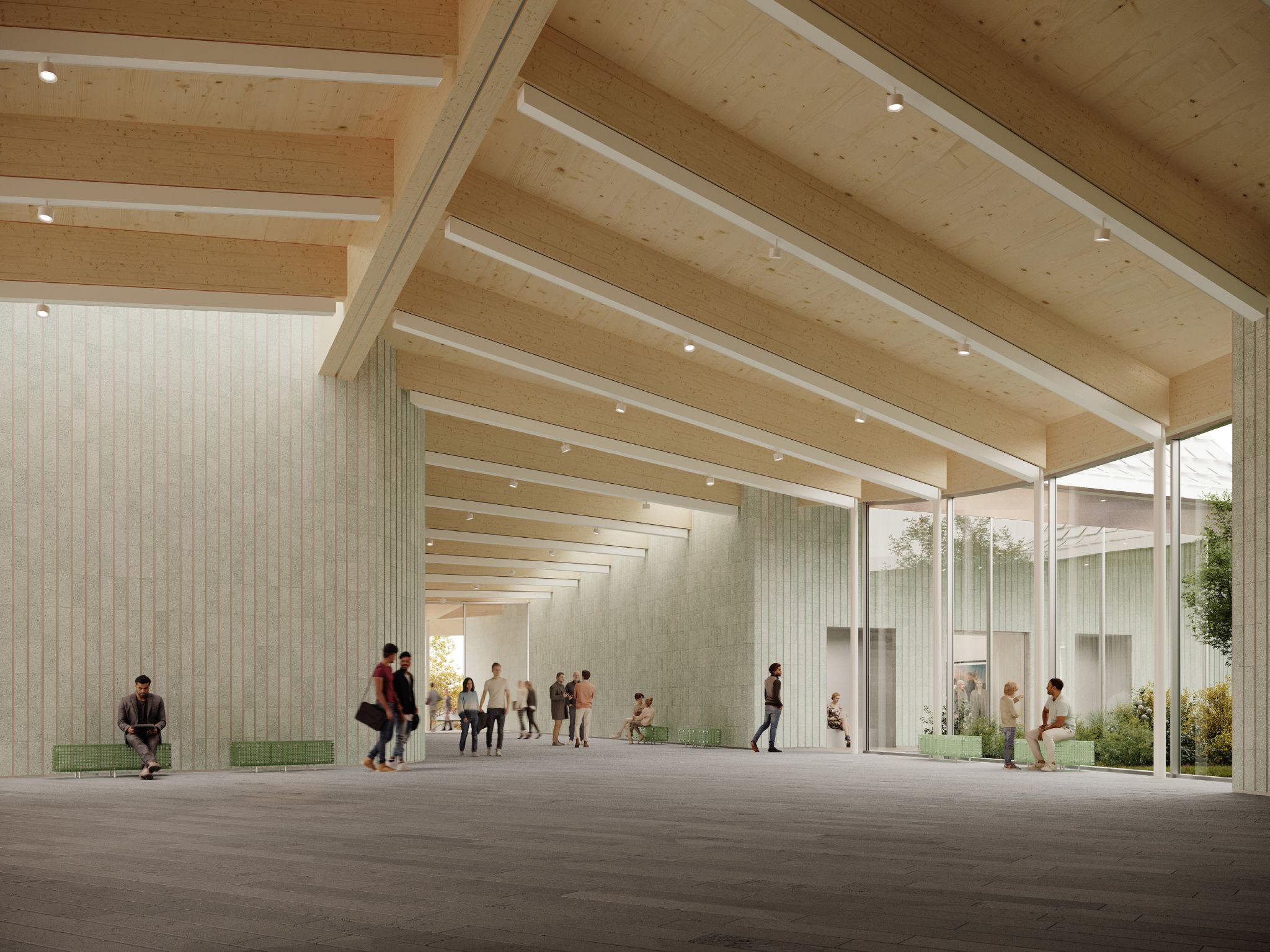
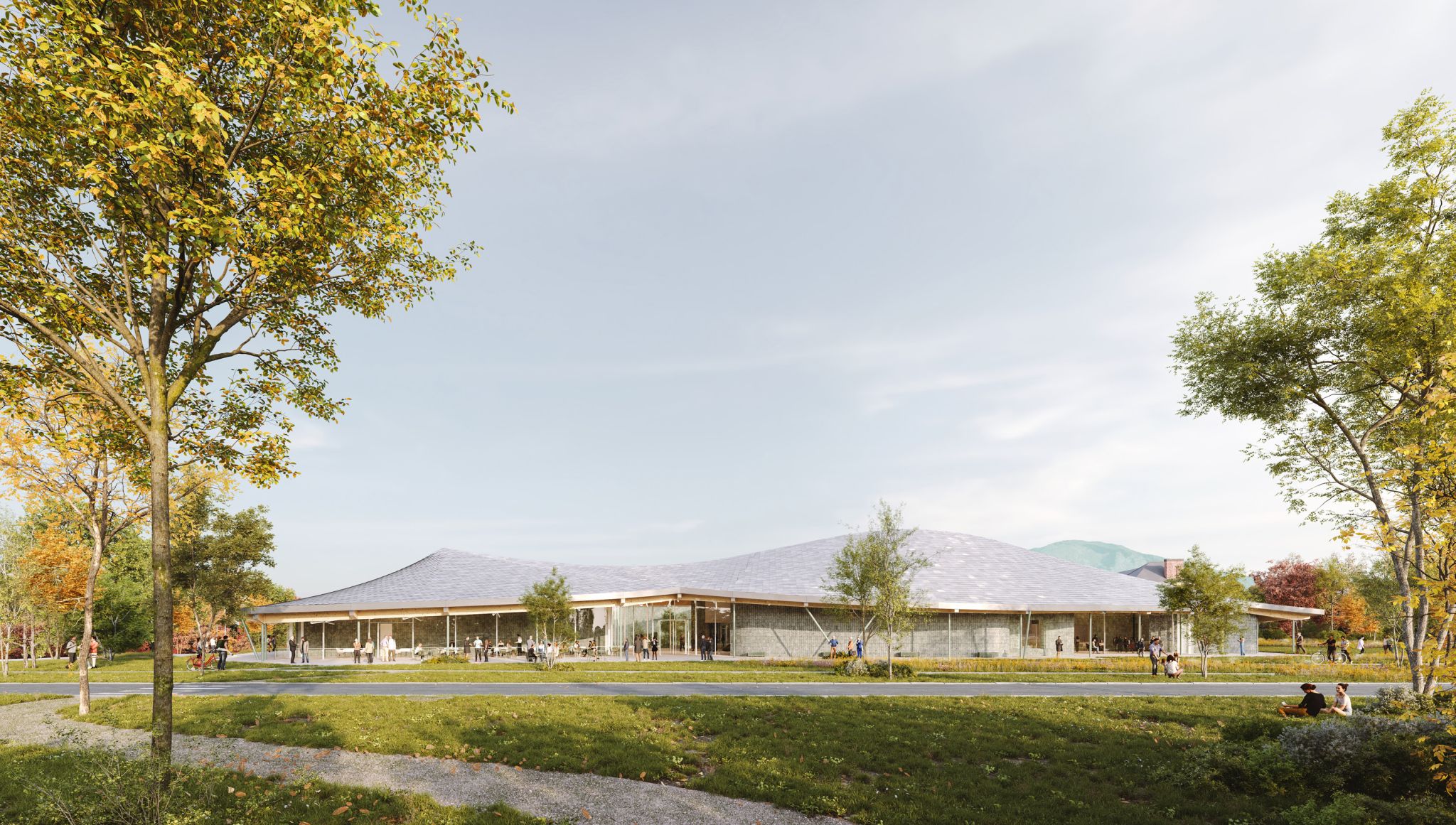
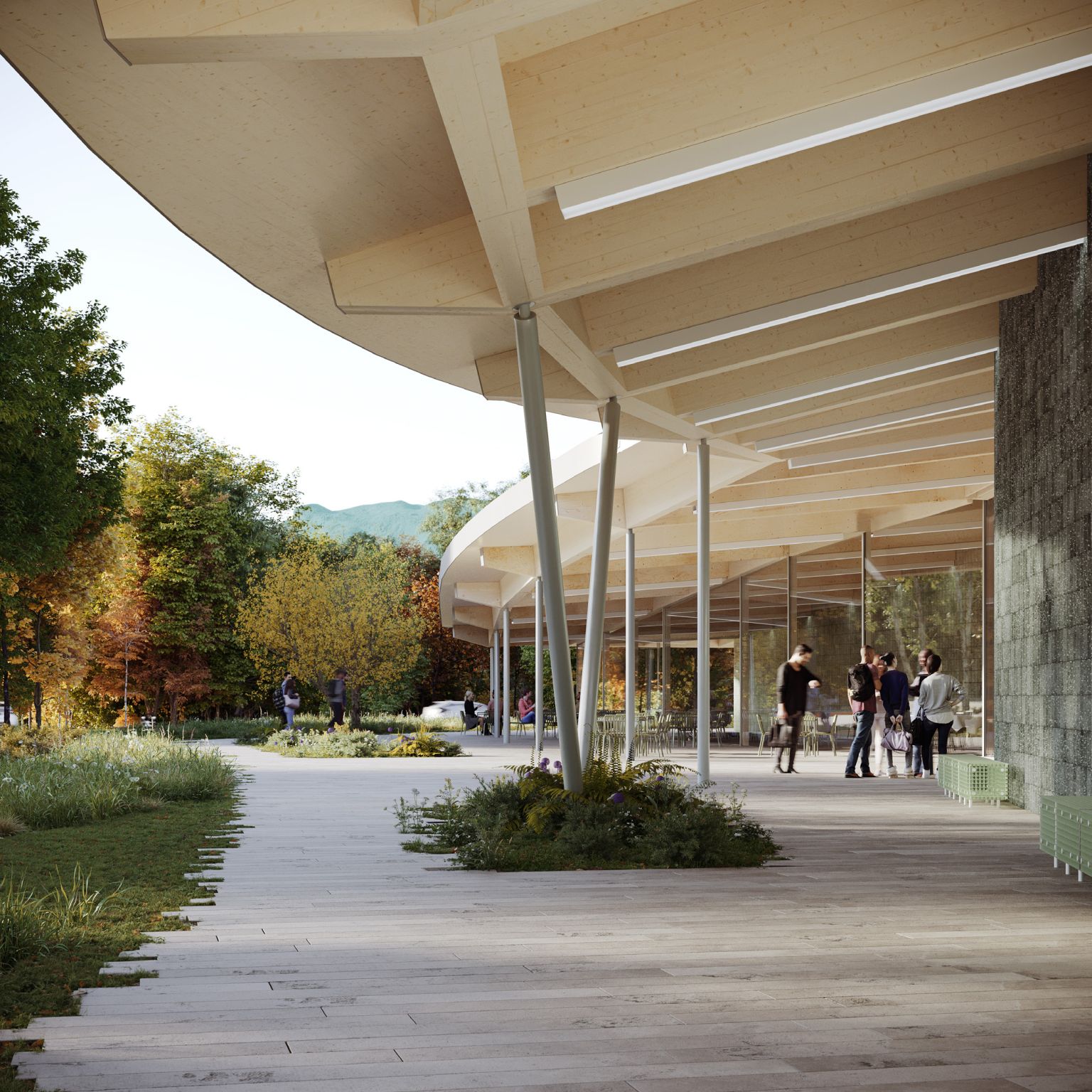
Developed in collaboration with Nordic Structure, the Williams College Museum is an iconic architectural project featuring cold-bent CLT panels — a technical feat requiring extreme digital precision.
TC2 was commissioned to carry out the parametric 3D modeling of all timber components and the automated panel layout for CNC machining.
The objective: to control the geometry of 273 unique panels while ensuring perfect continuity between design, fabrication, and installation.
MISSION AND TC2’s interventions
TC2 supported Nordic Structure throughout all stages of the project’s digital preparation.
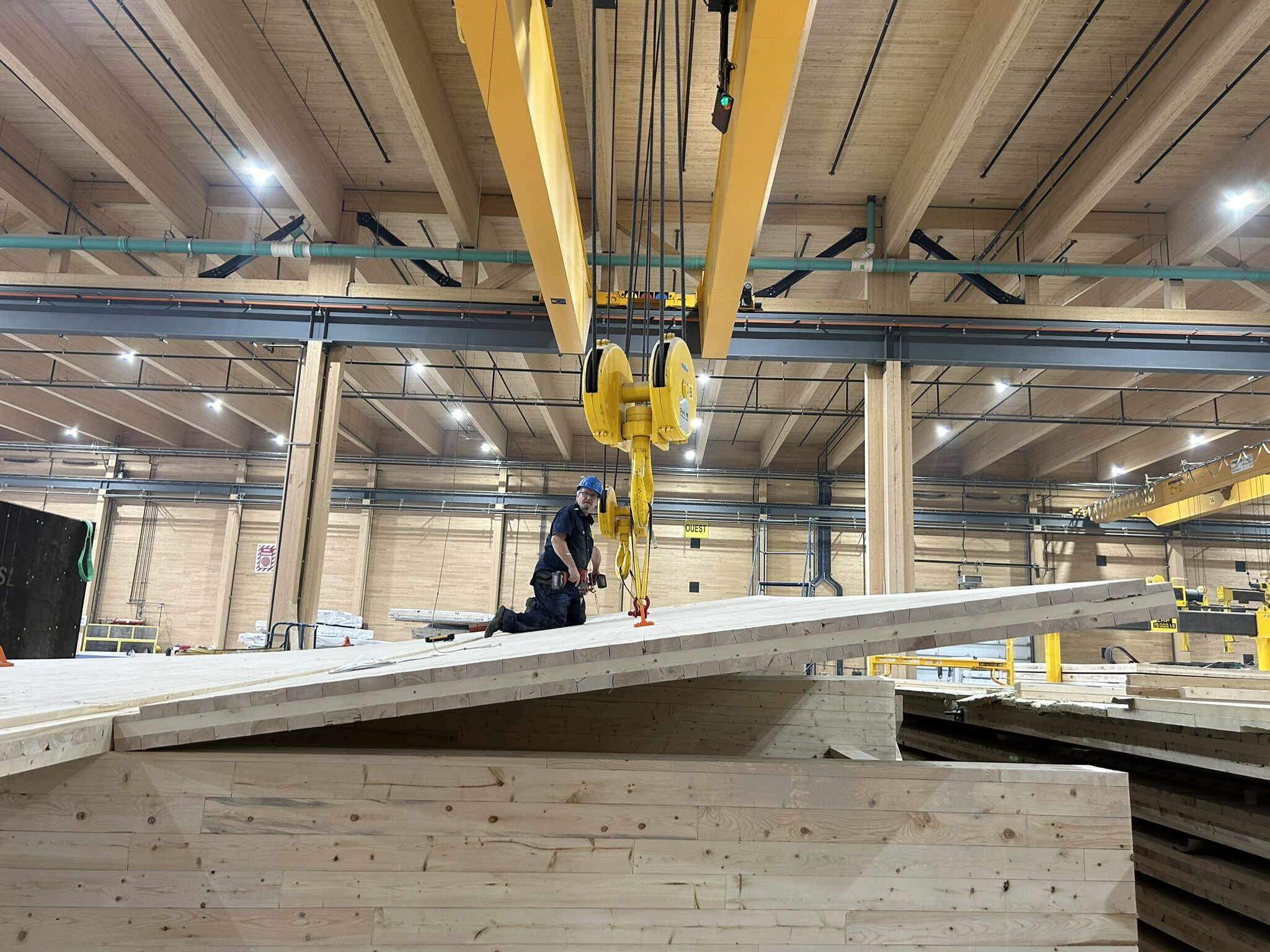
The challenge lay in the unfolding and precise positioning of each CLT panel, whose bends and twists had to be anticipated from the design phase.
The main interventions by TC2:
- Development of a global parametric model integrating all structural and machining constraints,
- Automation of panel layout and openings (drillings, fastenings, grooves),
- Creation of a Python script to generate part numbers, assembly drawings, and CNC exports,
- Management of machining tolerances and geometric validation of each panel prior to production.
This parametric approach made it possible to produce comprehensive, reliable technical documentation directly usable by the manufacturing teams.
Technologies and tools used
The project was based on a connected digital workflow, combining design and fabrication tools:
3D modeling
Rhino 3D for precise geometric modeling.
CNC programming
Cadwork for conversion to CNC production and verification of cutting files.

Parametric system
Grasshopper and Python for creating parametric scripts, automating panel layouts, and managing exports.
The integration of these tools ensured perfect alignment between the architectural design and industrial production constraints.
Results and benefits
Thanks to the parametric modeling and automation developed by TC2:
-
- Les 273 panneaux CLT ont été générés, numérotés et exportés sans erreur,
- Le temps de préparation machine a été réduit de manière significative,
- The pose sur chantier s’est effectuée avec un ajustement parfait des éléments,
- The geometric precision of the panels resulted in an architectural outcome true to the original design.
This project illustrates the power of digital technology in streamlining complex timber construction: fewer errors, greater consistency, and optimized production.
Your project for the future
Do you want to automate the preparation of your complex timber projects, optimize your CNC exports, or develop a custom parametric system for your structures?
Contact TC2 to benefit from comprehensive technical support, from design to production.
Answers to your questions about our expertise and methods
What is a cold-bent CLT panel?
It is a cross-laminated timber (CLT) panel bent directly during assembly, without any prior forming process.
This technique requires highly precise 3D modeling to anticipate deformations and ensure structural stability.
What is panel layout?
Panel layout consists of distributing, numbering, and organizing the components on a fabrication plan.
In the case of the Williams College Museum project, TC2 automated this process: each CLT panel was positioned, identified, and exported to the CNC without manual intervention.
What are the benefits of parametric modeling?
Parametric modeling makes it possible to control all project parameters (thickness, folds, angles, drillings, etc.) and automatically generate the technical files.
This ensures a significant time saving, a reduction in human error, and consistent quality across all produced components.
What are the concrete benefits for the client?
- Complete reliability of CNC exports and production files,
- Improved scheduling control through the automation of repetitive tasks,
- Material savings thanks to optimized panel layout,
- Architectural quality preserved, even on complex geometries.
TC2 transforms modeling into a reliable, sustainable, and measurable production tool.
 English
  Français