
SHAKESPEARE PROJECT / QUEBEC (CANADA)
Advanced 3D modeling and timber CNC programming in collaboration with Art Massif
PROJECT CONTEXT
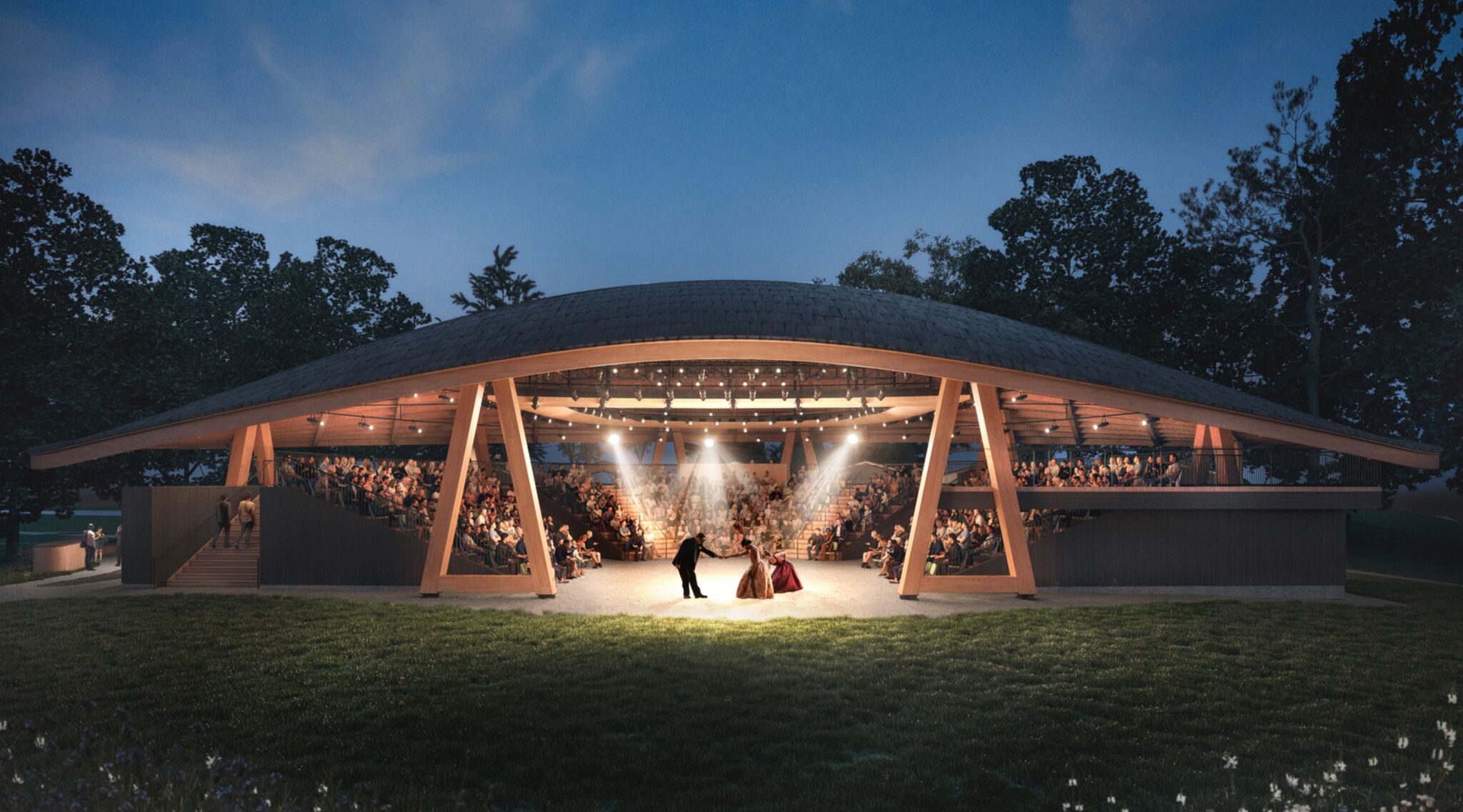
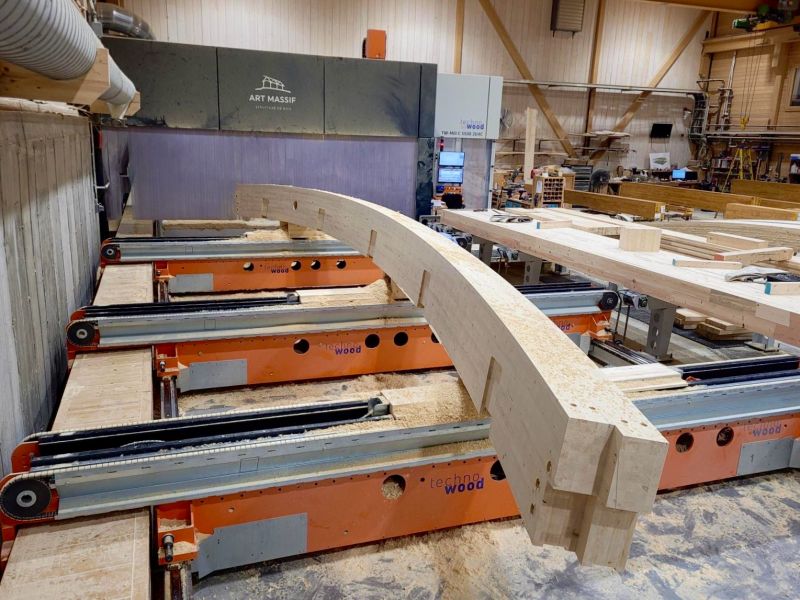
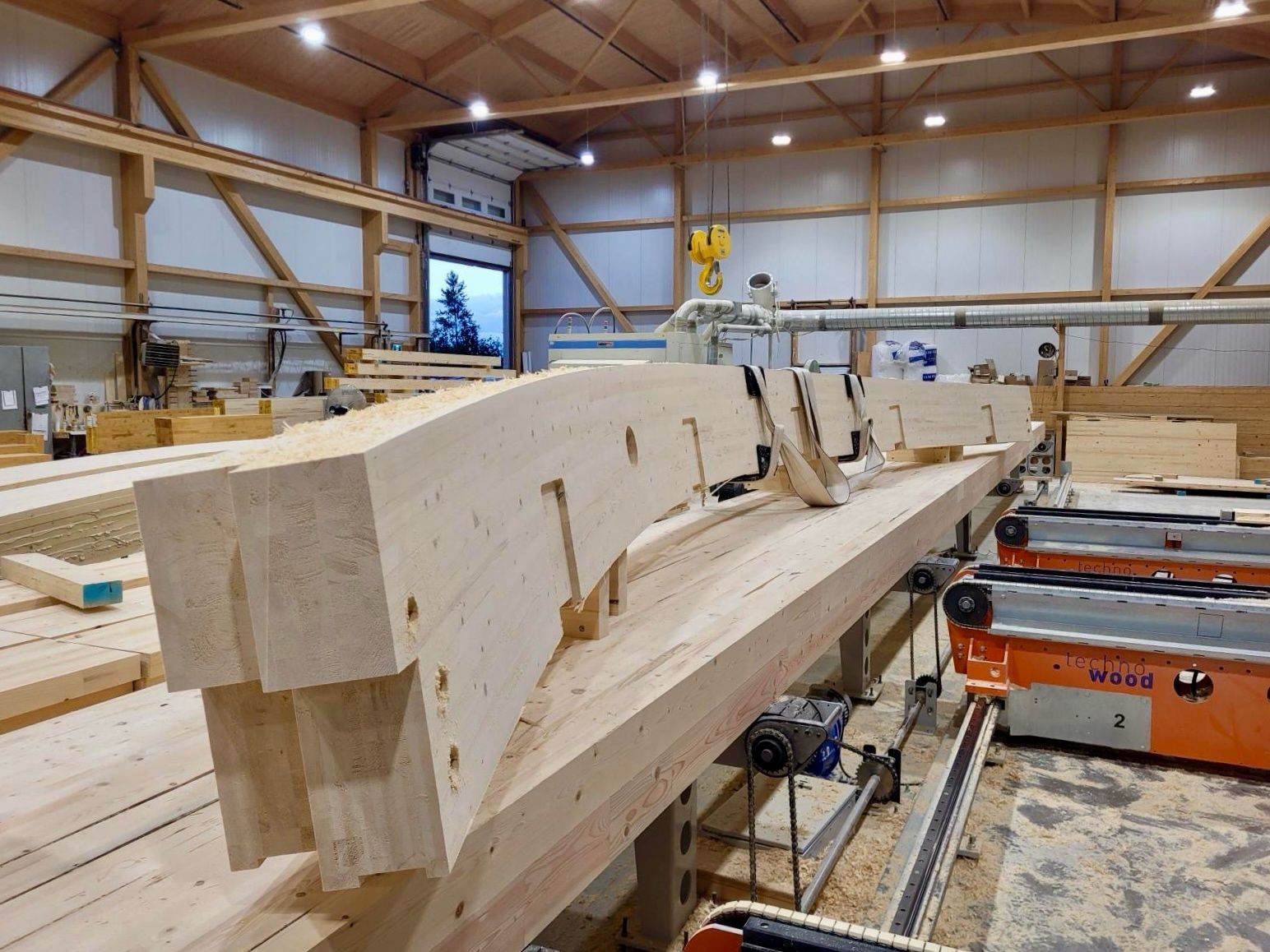
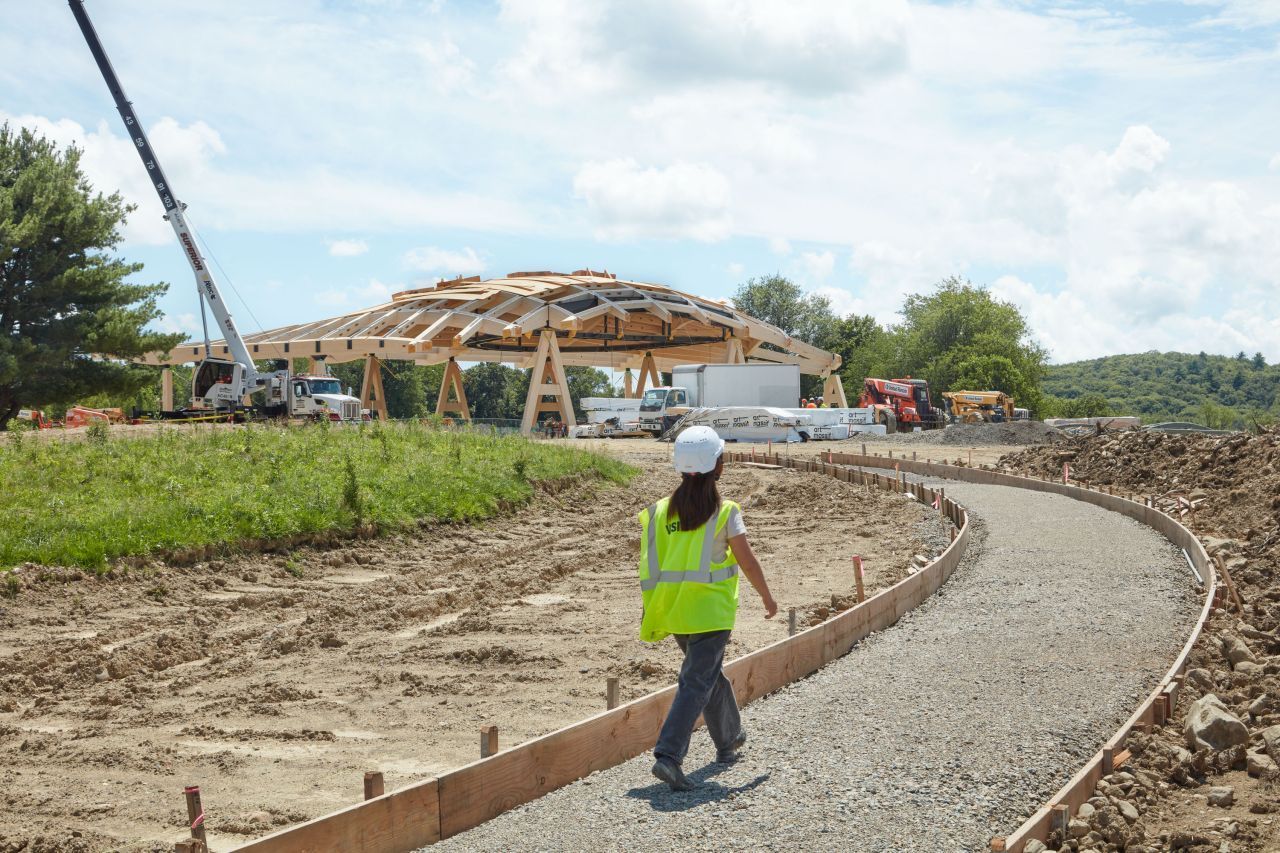
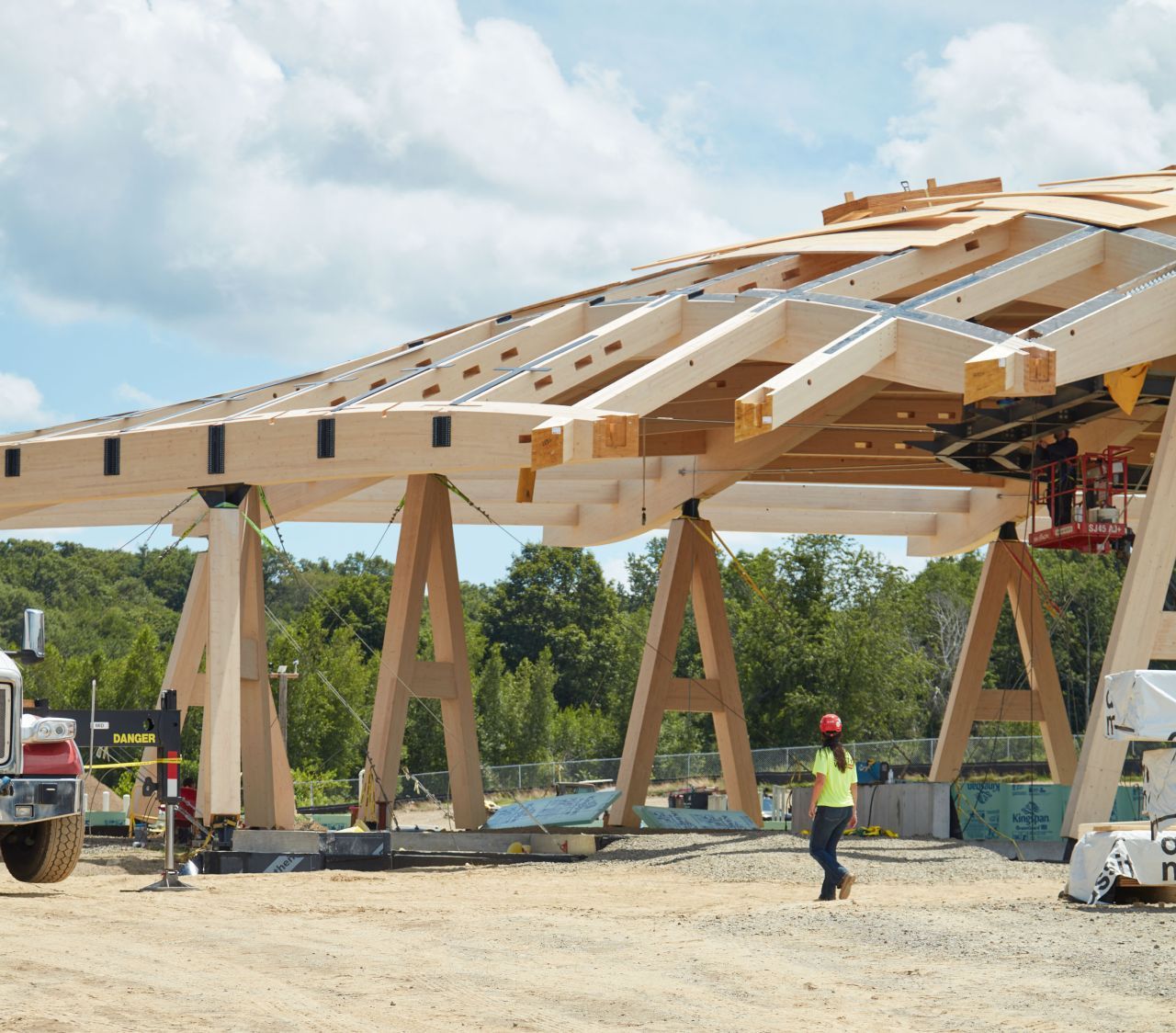
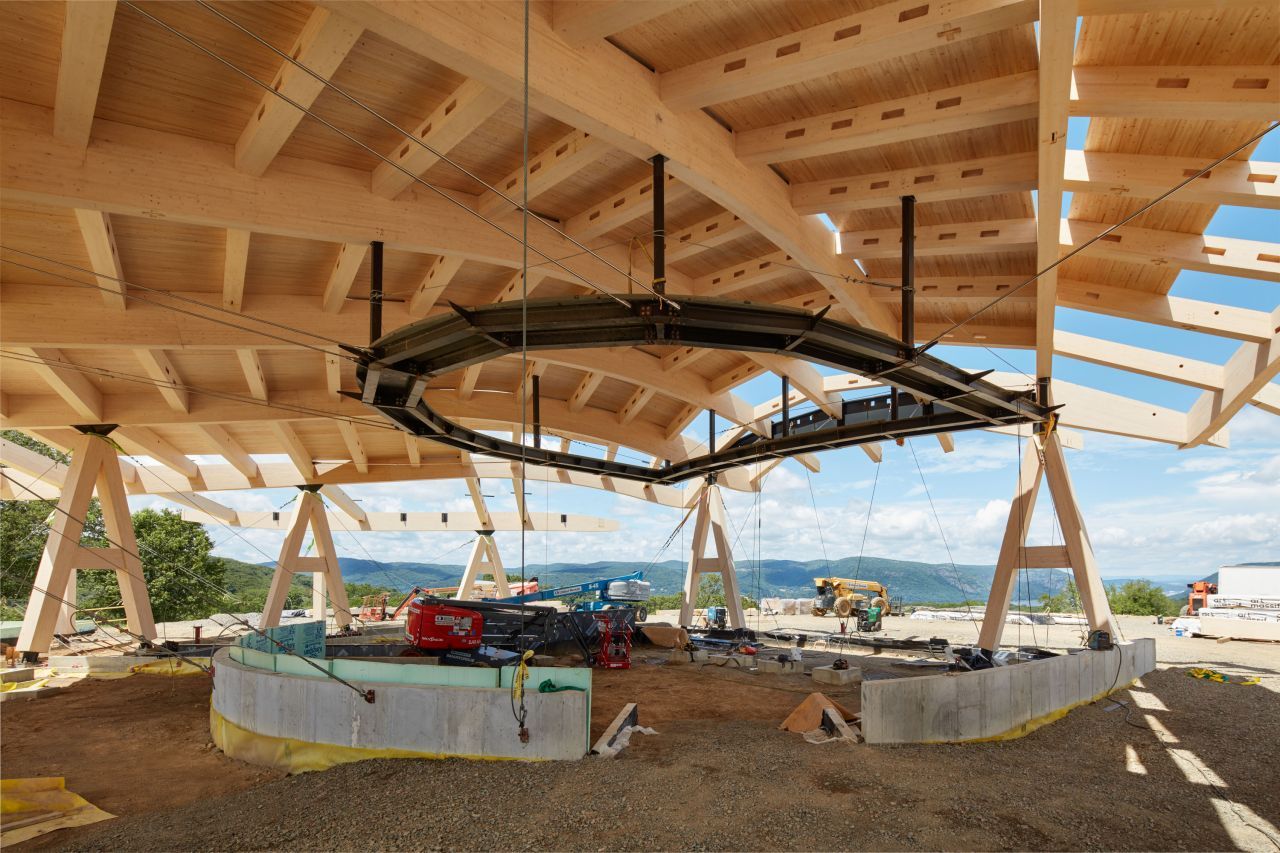
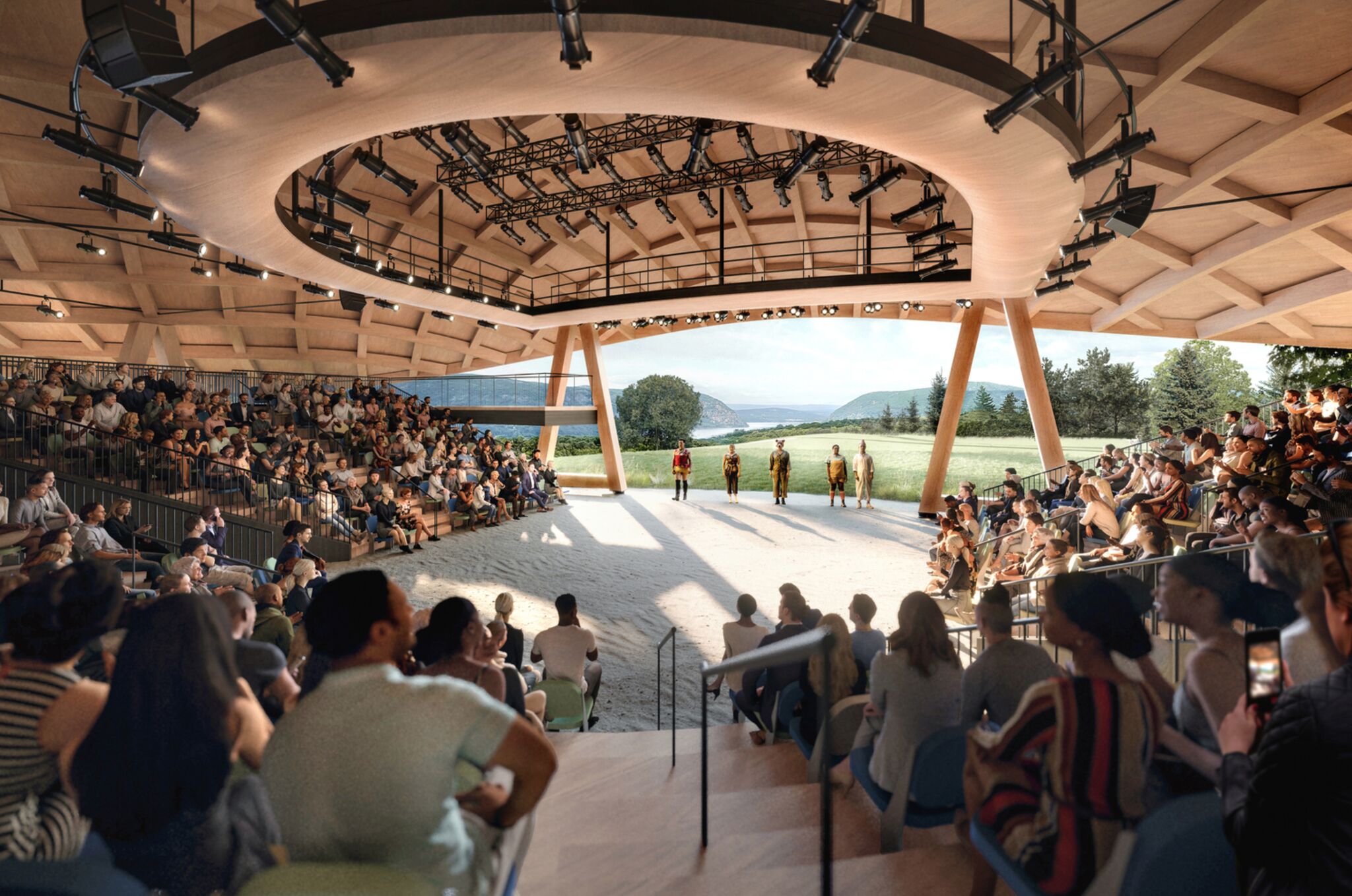
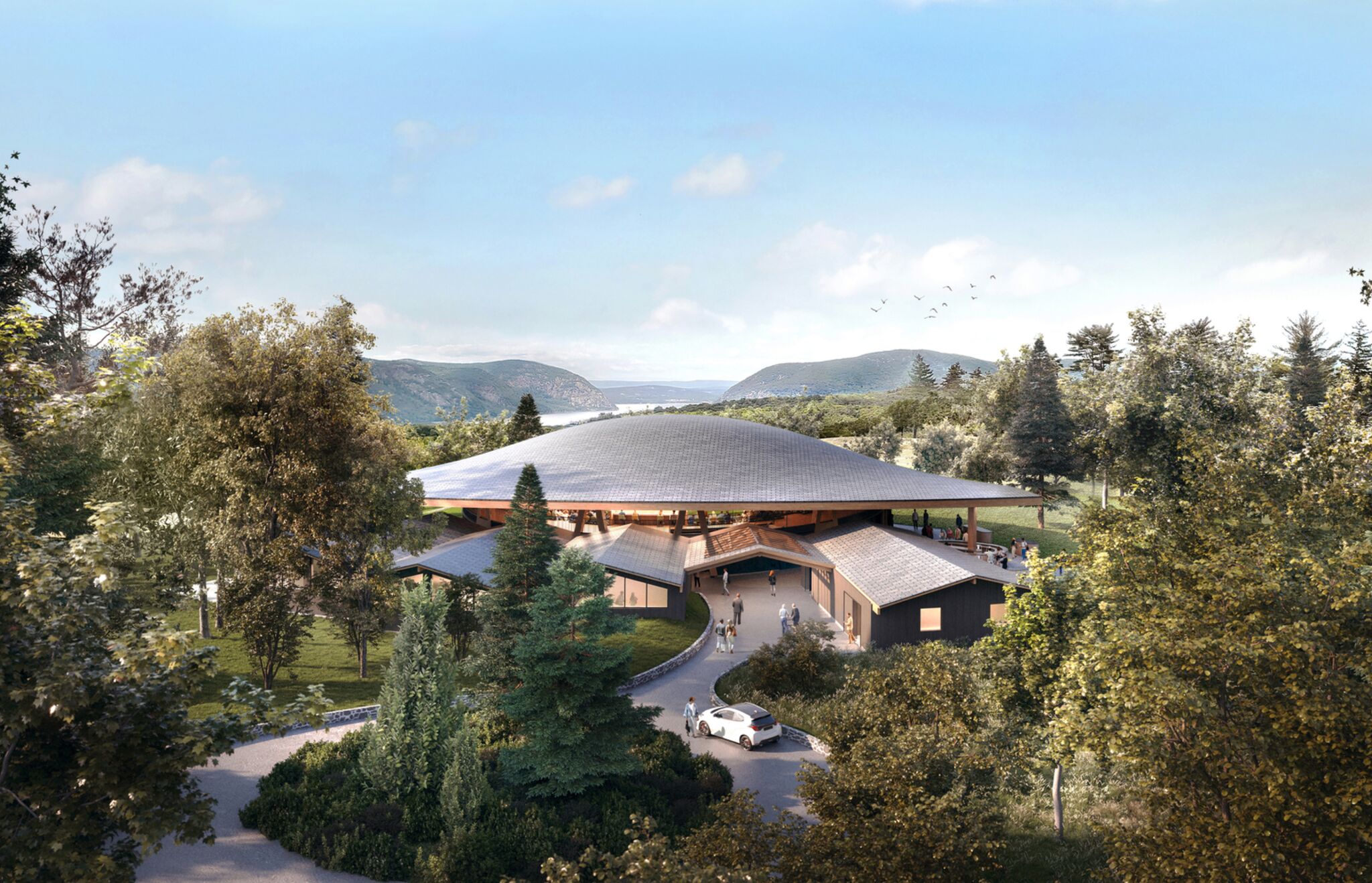
As part of the Shakespeare projet Quebec Art Massif commissioned TC2 to support the design and fabrication of a complex timber structure with curved geometries.
The objective: 3D modeling the double-curved edge beams and ensure CNC programmingwhile integrating the specific constraints of tooling and production machinery.
This project drew on all of TC2’s digital expertise to connect parametric design, fabrication geometry, and workshop reality, within a framework of precision and efficiency.
An emblematic project that highlights TC2’s ability to support its partners in exceptional international achievements.
MISSION AND TC2’s interventions
TC2 was involved throughout the entire digital workflow, from modeling to CNC file preparation.
The main tasks focused on:
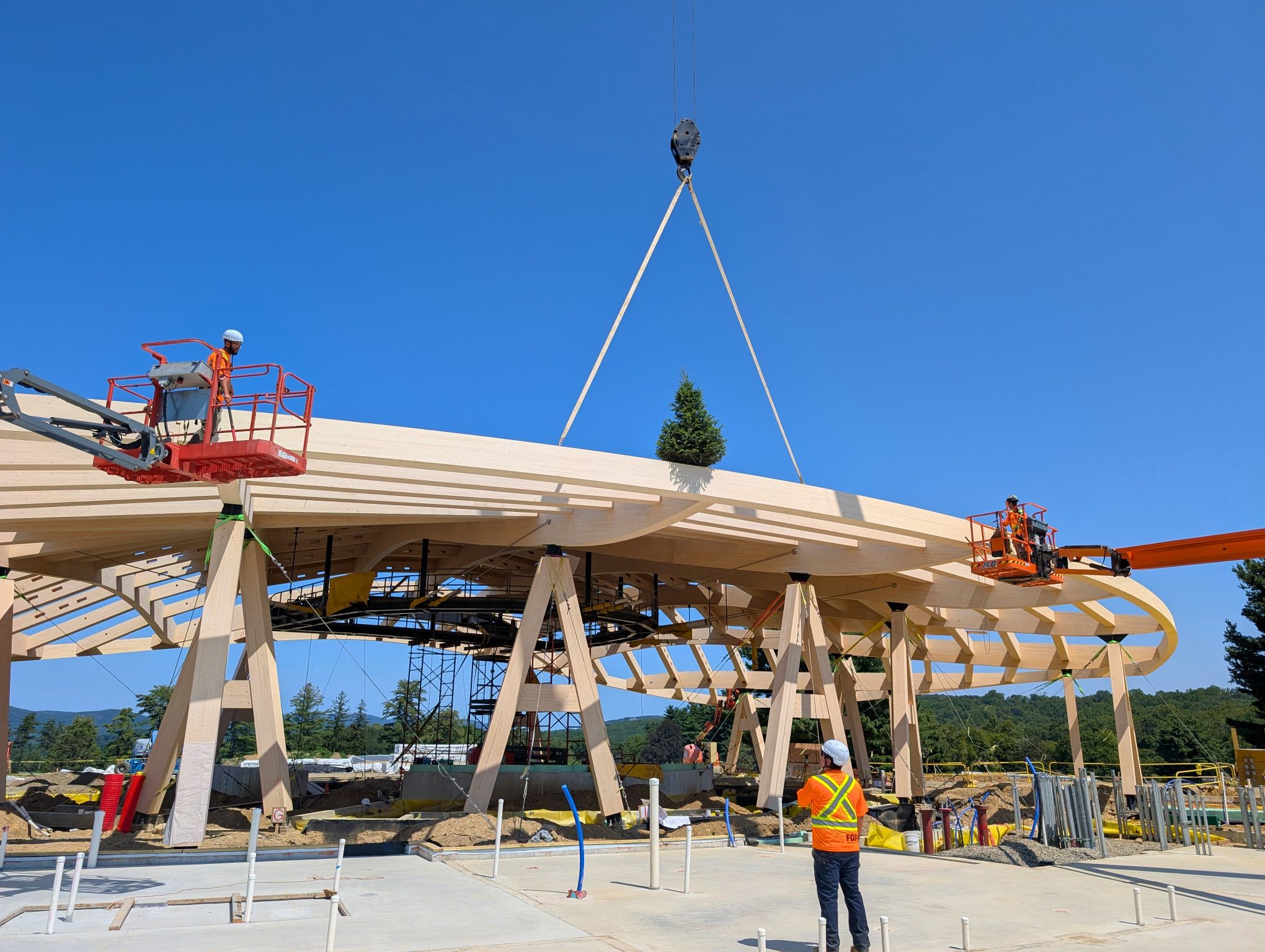
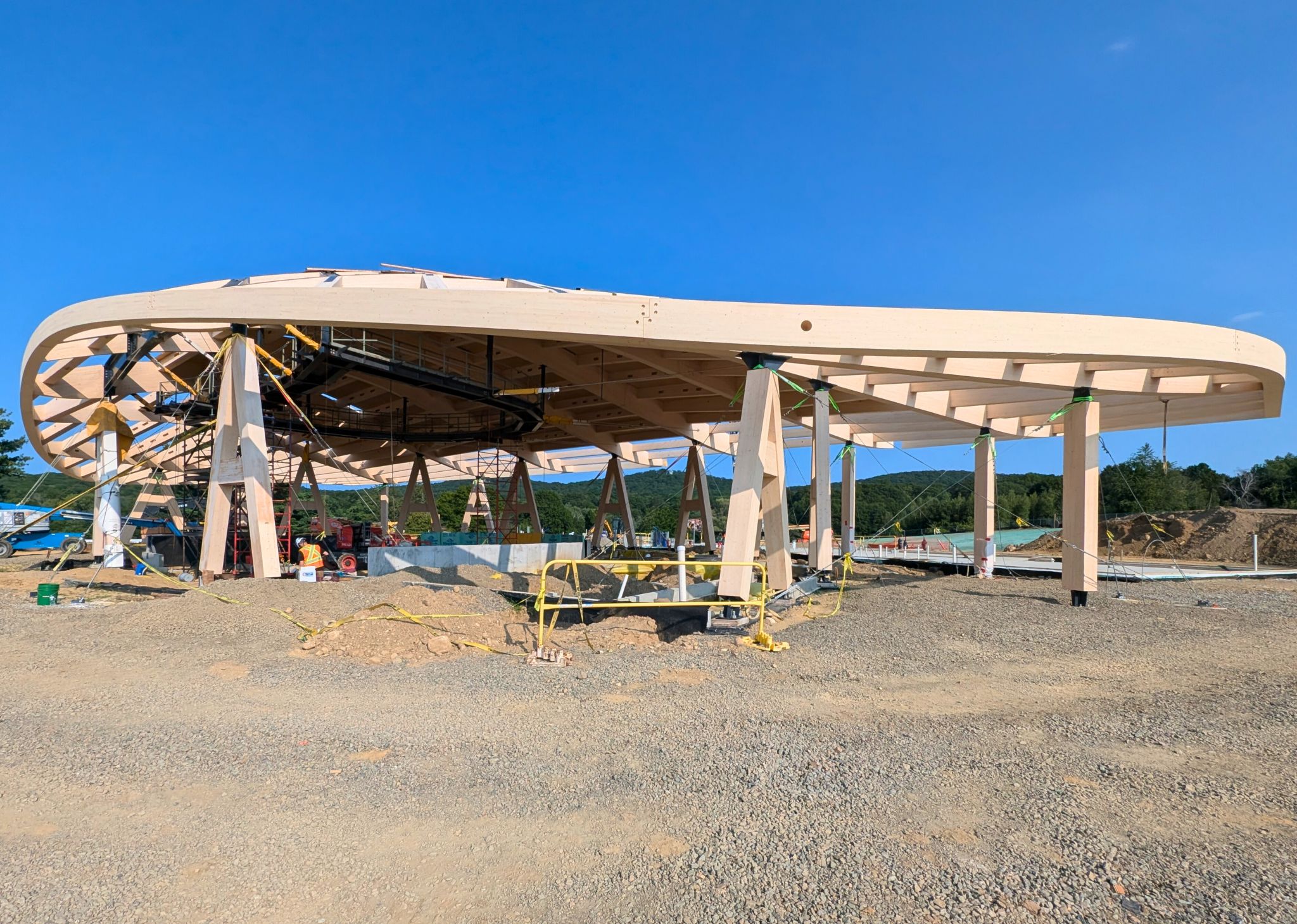
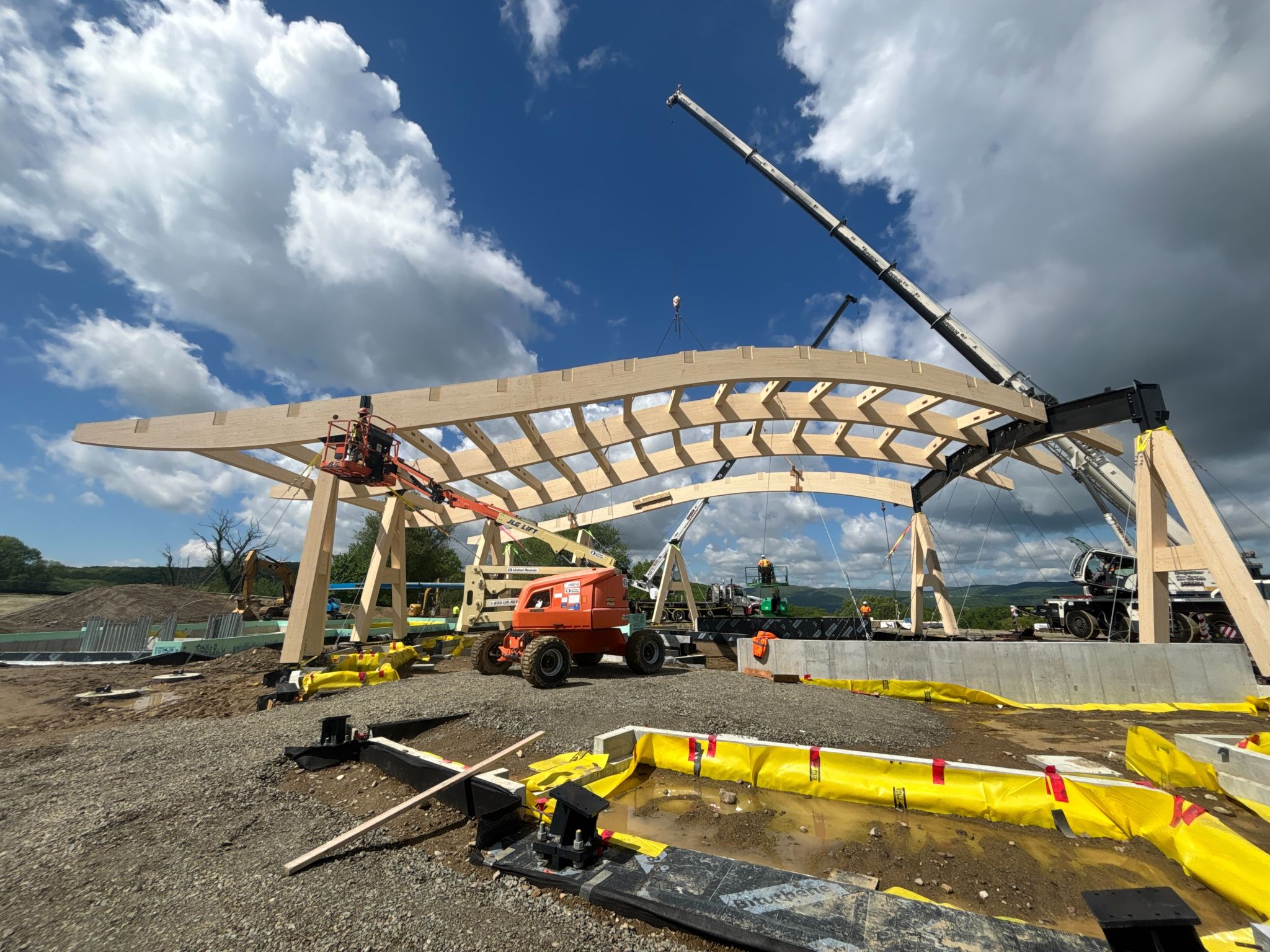
- The 3D modeling of the edge beams with double curvature, integrating manufacturing and assembly tolerances,
- The generation of finished and raw geometries, as well as the creation of the additional components required for production,
- The positioning of the parts on the Techno Wood machine, taking into account the capabilities and limitations of the tooling,
- The coordination of the two-step gluing process, ensuring perfect control of the geometry of the curved elements.
TC2 implemented a custom digital approach to ensure consistency between the 3D model, mechanical constraints, and production reality.
Technologies and tools used
ChatGPT a dit :The Shakespeare Project is based on a complete digital workflow, combining modeling, calculations, and machining:
3D modeling
Rhino 3D for geometric modeling and management of complex shapes

CNC programming
Cadwork and Techno Wood for machine simulation, positioning, and toolpath control.

Parametric system
Grasshopper and Python for parametric shape generation and automated CNC exports
This digital expertise made it possible to integrate real manufacturing constraints from the design phase, ensuring precise control of fabrication from the first to the last element.
Results and benefits
- Exceptional machining precision thanks to the automated generation of CNC toolpaths,
- Reduced adjustment and gluing time, thanks to precise modeling of raw and finished components,
- ChatGPT a dit :Seamless coordination between design, production, and assembly, thanks to a digital model fully optimized for the Art Massif teams.
- Consistent quality despite the complexity of the curved shapes and the large number of components.
The Shakespeare Project illustrates the effectiveness of an approach combining parametric modeling, CNC programming, and timber engineering applied to complex geometries.
Your project for the future
Are you looking for a partner to model your complex structures, automate your CNC programs, or develop a custom parametric system tailored to your tools?
Contact TC2 to benefit from comprehensive technical support, from design to production.
Answers to your questions about our expertise and methods
What is 3D modeling applied to timber construction?
It is a complete digital model that accurately represents each component, including its dimensions, curvatures, and joints.
This model makes it possible to anticipate adjustments and send the data directly to fabrication.
How does CNC programming improve project accuracy?
CNC programming converts the 3D model into machining instructions.
Each machine movement is precisely calculated to follow the project’s geometry, ensuring perfect cutting and minimizing manual errors.
Why integrate machine constraints from the design stage?
ChatGPT a dit :Anticipating the machines’ capabilities and limitations (angles, travel ranges, available tools) makes it possible to adapt the modeling to real manufacturing conditions.
This prevents inconsistencies between the digital model and production, ensuring a continuous data flow up to the finished component.
What are the concrete benefits for the client?
- CNC files ready for production, with no re-entry or adjustments required,
- Optimized lead times and improved workshop efficiency,
- Consistent quality across all components, even the most complex ones,
- Seamless consistency between design and fabrication, ensuring a final result true to the architectural intent.
TC2 thus enables its partners to gain efficiency, precision, and reliability at every stage of the project.
 English
  Français